What is Ekadashi? Fasting Calendar for 2026

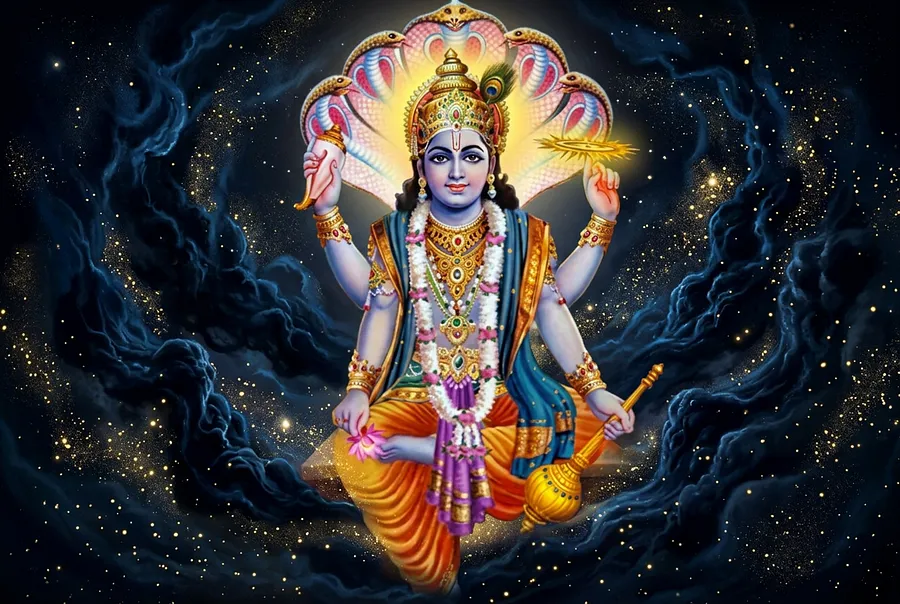
Ekadashi is one of the oldest and most revered fasts in the Vedic tradition, a day when the lunar energy reaches special strength and opens a rare opportunity for inner purification. It is a conscious pause in which the body, mind, and spirit align to one shared rhythm.

The name comes from the Sanskrit word for “eleven”: Ekadashi falls on the eleventh lunar day of each of the month’s two halves — Krishna Paksha (the dark half, from full moon to new moon) and Shukla Paksha (the light half, from new moon to full moon). This is how Ekadashi comes around twice a month — part of a precise astronomical calculation that I always hold in special regard in my work.

In a spiritual sense, the number eleven symbolizes our senses: the five organs of perception, the five organs of action, and the Mind that governs them. By observing Ekadashi, we get a rare chance — for one day, to bring these eleven senses under conscious control, and in doing so, to slightly shift the course of our Destiny.

On the physical level, this means abstaining from food, fully or partially. But what’s truly interesting happens on the subtle plane: on this day, accumulated energy and special rituals bring us closer to the Higher Powers than on any other day of the lunar month.

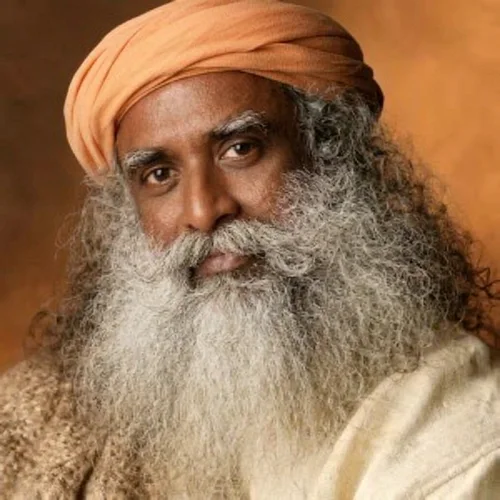
sadhguru_optimized

I’ve observed this in my own experience for many years, and I can say that Ekadashi is about stopping once every two weeks to listen to yourself.

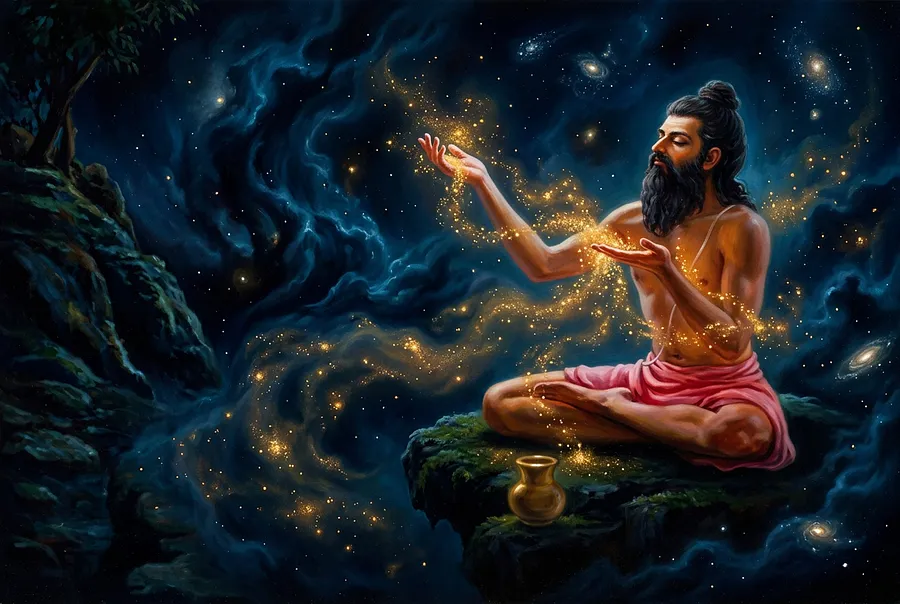
Ekadashi is the eleventh day after the full moon and the eleventh day after the new moon. Human physiology moves through a cycle called a mandala roughly every 40–48 days. Within this cycle, three particular days arise when the body itself doesn’t ask for food — these days can differ from person to person and don’t necessarily fall at equal intervals. If you learn to notice these days and don’t force food on the body — simply because it isn’t asking for it — many health problems will resolve on their own, thanks to this simple pattern.

— Jaggi Vasudev (Sadhguru)

How to fast correctly on Ekadashi

The Puranas describe three main ways to keep this fast — choose the one that suits you:

Nirjala — a complete fast, without a single drop of food or water throughout the day. The strictest option: it deeply purifies energy and body, and accelerates spiritual progress the most.

Sajala — you may drink water, freshly squeezed juices, and other liquids all day. Excellent for cleansing the body and well suited if you need to recover after an illness.

Pharal — a gentle option for those just starting the practice. Milk and fruit are allowed. This kind of fast wonderfully calms the emotions and helps flush out toxins.

How to fast correctly on Ekadashi: my practical recommendations

To get the most benefit from the fast, I recommend following these rules:

  • on the evening before Ekadashi, eat a light dinner before sunset;
  • on Ekadashi itself, abstain from food — choose one of the three fasting options above;
  • throughout the day, try to avoid unnecessary emotion, arguments, and harsh words;
  • turn your thoughts inward and toward the spiritual — this is the best day for meditation and mantras;
  • if you have the chance to visit a holy place and pray there on this specific day, the progress will be especially noticeable;
  • the next morning, start eating within 40 minutes of sunrise in your region — this is called paran, and it’s important not to break this rule.

Ekadashi calendar for 2026

Fasting start and end times are given for Kyiv, accounting for the shift to summer and winter time.

January 2026

January 14, Wednesday — Shattila Ekadashi
Fast begins in Kyiv: Jan 14, 2026, 07:50
Paran (breaking the fast) in Kyiv: Jan 15, 2026, 07:50 — 10:20

January 29, Thursday — Jaya (Bhaimi) Ekadashi
Fast begins in Kyiv: Jan 29, 2026, 07:28
Paran (breaking the fast) in Kyiv: Jan 30, 2026, 07:28 — 09:58

February 2026

February 13, Friday — Vijaya Ekadashi
Fast begins in Kyiv: Feb 13, 2026, 06:58
Paran (breaking the fast) in Kyiv: Feb 14, 2026, 06:58 — 09:28

February 27, Friday — Amalaki Ekadashi
Fast begins in Kyiv: Feb 27, 2026, 07:25
Paran (breaking the fast) in Kyiv: Feb 28, 2026, 07:25 — 09:55

March 2026

March 15, Sunday — Papmochani Ekadashi
Fast begins in Kyiv: Mar 15, 2026, 05:44
Paran (breaking the fast) in Kyiv: Mar 16, 2026, 05:44 — 08:14

March 29, Sunday — Kamada Ekadashi
Fast begins in Kyiv: Mar 29, 2026, 05:07
Paran (breaking the fast) in Kyiv: Mar 30, 2026, 05:07 — 07:37

April 2026

April 13, Monday — Varuthini Ekadashi
Fast begins in Kyiv: Apr 13, 2026, 05:29
Paran (breaking the fast) in Kyiv: Apr 14, 2026, 05:29 — 07:59

April 27, Monday — Mohini Ekadashi
Fast begins in Kyiv: Apr 27, 2026, 04:55
Paran (breaking the fast) in Kyiv: Apr 28, 2026, 04:55 — 07:25


May 2026

May 13, Wednesday — Apara Ekadashi
Fast begins in Kyiv: May 13, 2026, 04:21
Paran (breaking the fast) in Kyiv: May 14, 2026, 04:21 — 06:51

May 27, Wednesday — Padmini Ekadashi
Fast begins in Kyiv: May 27, 2026, 03:58
Paran (breaking the fast) in Kyiv: May 28, 2026, 03:58 — 06:28

June 2026

June 11, Thursday — Parama Ekadashi
Fast begins in Kyiv: Jun 11, 2026, 03:45
Paran (breaking the fast) in Kyiv: Jun 12, 2026, 03:45 — 06:15

June 25, Thursday — Pandava Ekadashi
Fast begins in Kyiv: Jun 25, 2026, 03:45
Paran (breaking the fast) in Kyiv: Jun 26, 2026, 03:45 — 06:15

July 2026

July 11, Saturday — Yogini Ekadashi
Fast begins in Kyiv: Jul 11, 2026, 04:00
Paran (breaking the fast) in Kyiv: Jul 12, 2026, 04:00 — 06:30

July 25, Saturday — Devshayani Ekadashi
Fast begins in Kyiv: Jul 25, 2026, 04:22
Paran (breaking the fast) in Kyiv: Jul 26, 2026, 04:22 — 06:52

August 2026

August 9, Sunday — Kamika Ekadashi
Fast begins in Kyiv: Aug 9, 2026, 04:50
Paran (breaking the fast) in Kyiv: Aug 10, 2026, 04:50 — 07:20

August 23, Sunday — Shravana Putrada Ekadashi
Fast begins in Kyiv: Aug 23, 2026, 05:17
Paran (breaking the fast) in Kyiv: Aug 24, 2026, 05:17 — 07:47

September 2026

September 7, Monday — Aja Ekadashi
Fast begins in Kyiv: Sep 7, 2026, 05:45
Paran (breaking the fast) in Kyiv: Sep 8, 2026, 05:45 — 08:15

September 22, Tuesday — Parshva Ekadashi
Fast begins in Kyiv: Sep 22, 2026, 06:14
Paran (breaking the fast) in Kyiv: Sep 23, 2026, 06:14 — 08:44

October 2026

October 6, Tuesday — Indira Ekadashi
Fast begins in Kyiv: Oct 6, 2026, 05:42
Paran (breaking the fast) in Kyiv: Oct 7, 2026, 05:42 — 08:12

October 22, Thursday — Papankusha Ekadashi
Fast begins in Kyiv: Oct 22, 2026, 06:14
Paran (breaking the fast) in Kyiv: Oct 23, 2026, 06:14 — 08:44

November 2026

November 5, Thursday — Rama Ekadashi
Fast begins in Kyiv: Nov 5, 2026, 06:44
Paran (breaking the fast) in Kyiv: Nov 6, 2026, 06:44 — 09:14

November 20, Friday — Utthana Ekadashi
Fast begins in Kyiv: Nov 20, 2026, 07:14
Paran (breaking the fast) in Kyiv: Nov 21, 2026, 07:14 — 09:44

December 2026

December 4, Friday — Utpanna Ekadashi
Fast begins in Kyiv: Dec 4, 2026, 07:39
Paran (breaking the fast) in Kyiv: Dec 5, 2026, 07:39 — 10:09

December 20, Sunday — Mokshada Ekadashi
Fast begins in Kyiv: Dec 20, 2026, 07:56
Paran (breaking the fast) in Kyiv: Dec 21, 2026, 07:56 — 10:26

How Ekadashi dates are calculated

A common question is why Ekadashi dates are sometimes calculated differently in different places. Let’s look at this important point more closely, because it genuinely matters for correct practice.

Why the calculations sometimes "don't match the internet"

If in your regional calendar an Ekadashi that was “supposed to” fall on November 1 suddenly shifts to November 2 — the reason lies in a phenomenon called Dashami Viddha (or Viddha Ekadashi).

Here’s how it works:

1. What “Dashami Viddha” means

Ekadashi is the 11th lunar day (tithi). Dashami is the 10th lunar day. Viddha (literally “pierced,” “tainted”) describes a situation where the 11th day begins before the 10th has ended.

2. The rule of a “pure” Ekadashi

The lunar day must begin at least two muhurtas (about 96 minutes) before dawn, after the Dashami has ended. If the Dashami “overlaps” the start of Ekadashi — meaning the 11th day begins while the 10th is still underway — that day isn’t considered suitable for the fast.

3. The result: the fast shifts to Dvadashi

If the first date is “tainted” by Dashami Viddha, the fast moves to the next day — the 12th lunar day, Dvadashi. In this case the day is called Mahadvadashi (the Great Dvadashi), and it is on this day that the fast is observed, so as not to break the rule of a “pure” Ekadashi.

So a shifted date isn’t a calculation error — it’s strict adherence to Vedic astronomical rules, which I hold to as a matter of principle.

The different types of Ekadashi

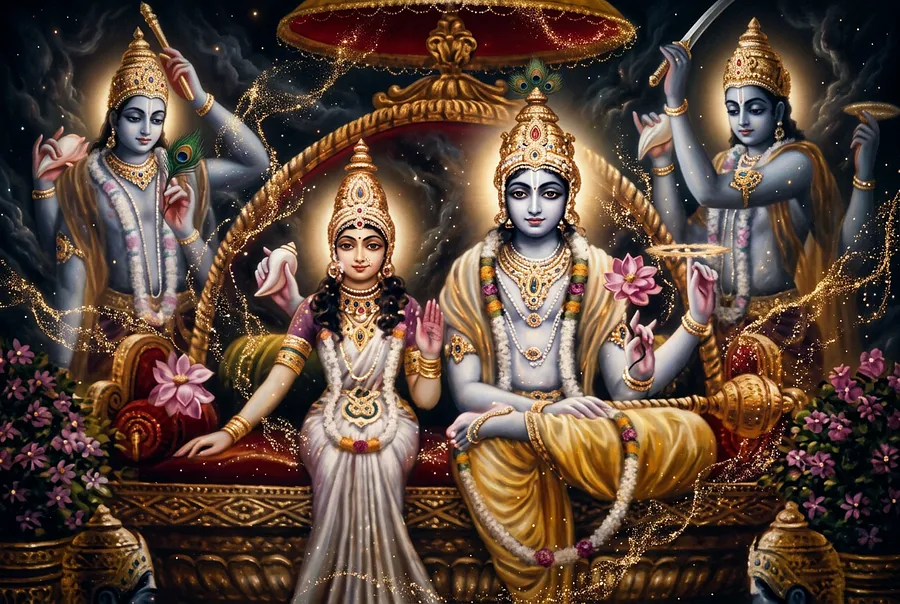
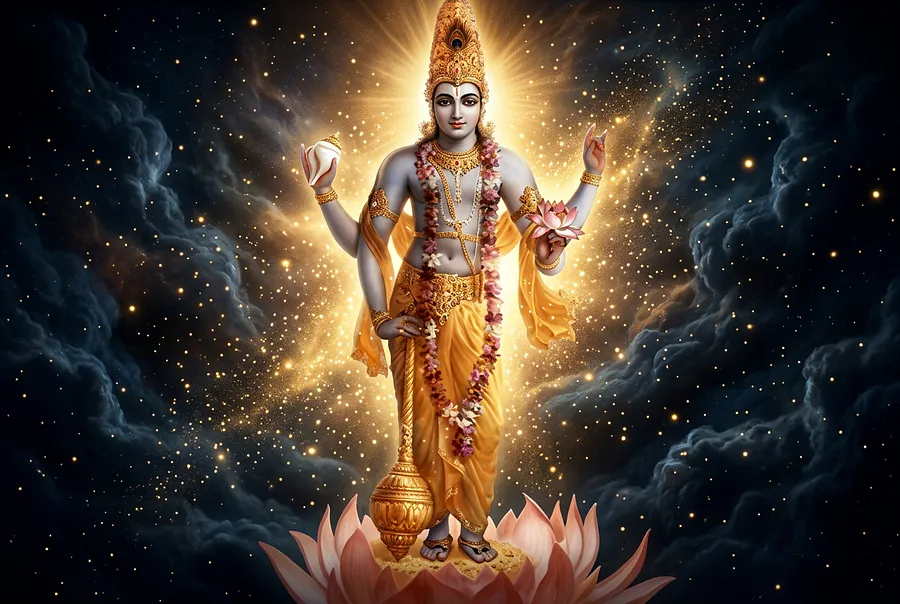
There are 24 types of Ekadashi in a year, and each is linked to a specific incarnation of Lord Vishnu. Each has its own dietary rules, which help direct mental energy in the right direction and gently keep us from wrong actions.

сапхала_optimized

Saphala

One of the most powerful Ekadashis. The fast begins at dawn and continues until sunrise the next day, Dvadashi. On this day, Lord Vishnu is offered incense, flowers, tulsi leaves, turmeric, sandalwood, kumkum, coconut in its shell, bananas, paan, and betel. Those observing the fast seek to purify the sins of past and present lives for a happy future incarnation. The puja concludes with the reading of the Vrata Katha (the story of the fast) and the singing of Aarti.

The legend of the fallen prince. Prince Lumpaka, the eldest son of King Mahishmana, led such a wicked life that his father exiled him to the forest. Living under a banyan tree and eating only fruit, he unknowingly observed Saphala Ekadashi — and attained liberation. Even an unconscious observance of this fast brings spiritual fruit.

Putrada

Falls in January, on the eleventh day of the light half of the month. The name translates as “giver of sons”: it’s believed that fasting combined with puja to Lord Vishnu can bless a family with children. The fast begins at dawn on Ekadashi and ends the following morning. Rice, legumes, garlic, and onion are forbidden; those not keeping a strict fast are allowed milk and fruit. On this day, Hindu families strictly avoid non-vegetarian food.

Interesting fact. The sattvic diet and spiritual practices of this day have a beneficial effect on reproductive health. According to legend, the childless King Suketumana and Queen Shaibya were granted a son by the Vishvadevas after observing this fast.

Путрада_optimized
Путрада_optimized

Putrada

Falls in January, on the eleventh day of the light half of the month. The name translates as “giver of sons”: it’s believed that fasting combined with puja to Lord Vishnu can bless a family with children. The fast begins at dawn on Ekadashi and ends the following morning. Rice, legumes, garlic, and onion are forbidden; those not keeping a strict fast are allowed milk and fruit. On this day, Hindu families strictly avoid non-vegetarian food.

Interesting fact. The sattvic diet and spiritual practices of this day have a beneficial effect on reproductive health. According to legend, the childless King Suketumana and Queen Shaibya were granted a son by the Vishvadevas after observing this fast.

Сатилла (Тильда)_optimized

Satila (Tilda)

The name comes from the word “til” — sesame seed. On this day, sesame is given and received as offerings, and dishes are prepared from it. Those observing the fast should donate sesame, grains, and other food — this strengthens one’s destiny. The story behind this day highlights the importance of annadana, the donation of food, in Hindu culture. Legumes and grains are forbidden; coconut, guava, and pumpkin are good offerings to the deity.

Six ways to use sesame on this day: bathing with sesame seeds in the water, applying a paste to the body, offering it to the gods, eating it, performing a homa (fire ritual), and donating it to those in need. Sesame is indeed rich in calcium and healthy fats, and has pronounced antioxidant properties.

Jaya

The fast lasts from the start of Jaya Ekadashi until the next morning. Non-vegetarian food is forbidden, as are legumes and rice, but a complete abstention from food isn’t required. Dishes such as aloo jeera, sabudana khichdi, sabudana kheer, kuttu ki sauri, or paratha are allowed, along with milk and fruit. Honey, leafy vegetables, and certain spices are considered less favorable on this day.

Indra’s curse. The Gandharva Malyavan and his beloved Pushpavati grew so absorbed in each other in Indra’s garden that they forgot their duties. Enraged, Indra cursed them to become demons — and only their chance observance of Jaya Ekadashi lifted the curse.

Джая_optimized
Джая_optimized

Jaya

The fast lasts from the start of Jaya Ekadashi until the next morning. Non-vegetarian food is forbidden, as are legumes and rice, but a complete abstention from food isn’t required. Dishes such as aloo jeera, sabudana khichdi, sabudana kheer, kuttu ki sauri, or paratha are allowed, along with milk and fruit. Honey, leafy vegetables, and certain spices are considered less favorable on this day.

Indra’s curse. The Gandharva Malyavan and his beloved Pushpavati grew so absorbed in each other in Indra’s garden that they forgot their duties. Enraged, Indra cursed them to become demons — and only their chance observance of Jaya Ekadashi lifted the curse.

Виджая_optimized

Vijaya

Traditionally a complete day-long fast is observed in honor of Lord Vishnu, who sustains the Earth. Tamasic food with onion and garlic is discouraged, and grains such as rice, lentils, and legumes are forbidden. A good choice is sabudana khichdi with ground nuts and potato, seasoned only with rock salt, without heavy spicing. Milk and dried fruit are allowed.

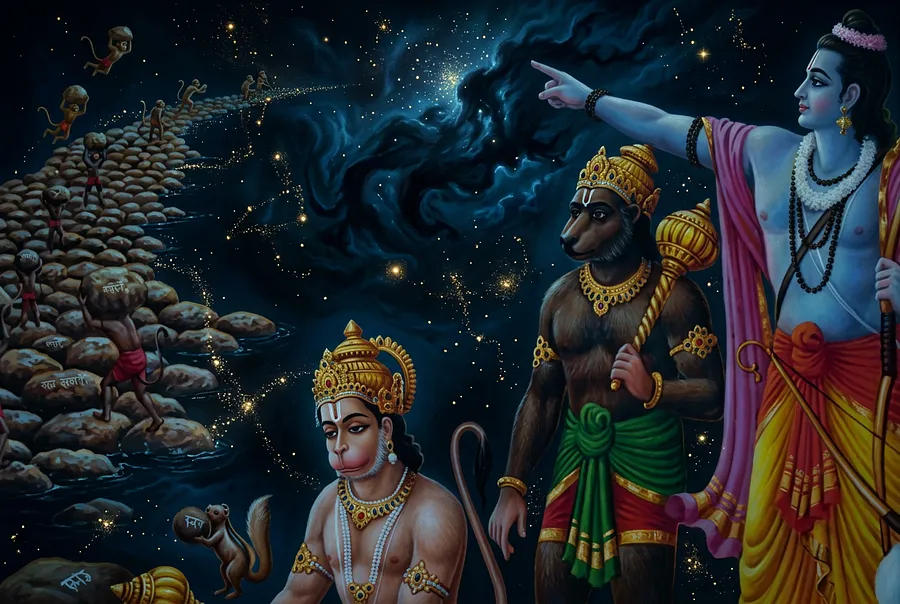
Rama’s Ekadashi. Lord Rama himself observed this fast before crossing the ocean to Lanka to battle Ravana, on the advice of the sage Bakadalbhya. It’s believed that the power of Vijaya Ekadashi is what brought him victory. “Vijaya” literally means “victory.”

Amalaki

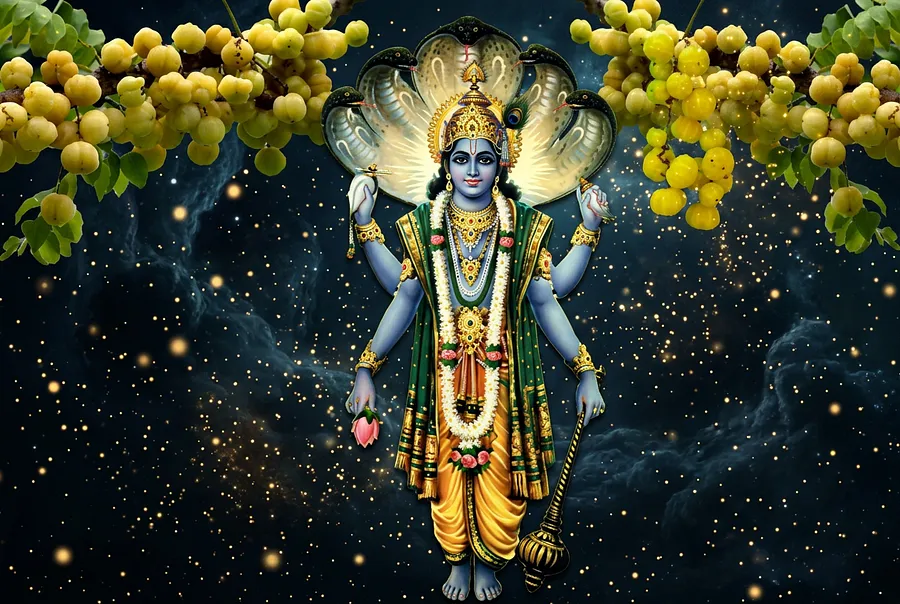
Celebrates the greatness of Lord Vishnu through the amla fruit, which holds an important place in both Ayurveda and Hinduism. According to the Padma Purana, amla was especially dear to Vishnu, which is why on this day people prepare an amla paste, worship the amla tree, eat and offer its fruit, and present it as prasad. Permitted foods include potato, nuts, milk, fruit, black pepper, and rock salt; grains and legumes are forbidden.

Vishnu’s tears became amla. According to legend, when Vishnu was meditating before the creation of Brahma, tears of joy fell to the earth and turned into the amla tree. Incidentally, amla contains roughly 20 times more vitamin C than an orange and is considered one of the strongest immune boosters in Ayurveda.

Амлаки_optimized
Амлаки_optimized

Amalaki

Celebrates the greatness of Lord Vishnu through the amla fruit, which holds an important place in both Ayurveda and Hinduism. According to the Padma Purana, amla was especially dear to Vishnu, which is why on this day people prepare an amla paste, worship the amla tree, eat and offer its fruit, and present it as prasad. Permitted foods include potato, nuts, milk, fruit, black pepper, and rock salt; grains and legumes are forbidden.

Vishnu’s tears became amla. According to legend, when Vishnu was meditating before the creation of Brahma, tears of joy fell to the earth and turned into the amla tree. Incidentally, amla contains roughly 20 times more vitamin C than an orange and is considered one of the strongest immune boosters in Ayurveda.

Папмочани_optimized

Papamochani

Observed in the month of Chaitra. Devotees rise early and fast all day, preparing special dishes — kheer, til laddu, meva — as prasad for the Lord. Those unable to fast completely may eat milk, fruit, phalahari khichdi, and juice. Vegetables, whether cooked or raw, are forbidden. On this day it’s customary to donate food and clothing to those in need.

“Remover of sins.” The legend tells of a celestial apsara who seduced the holy sage Medhavi. Both committed a sin, but observing Papamochani Ekadashi fully cleansed them — the sin here is compared to dust on a mirror, wiped away by this fast.

Kamada

Falls near the start of the “Hindu New Year”; the fast on this day is believed to protect against curses of all kinds. During prayer to Lord Vishnu, a special bhog is offered, and it’s best to abstain from food entirely on this day. If eating is necessary, the food should be strictly sattvic: dried fruit, fresh fruit, dairy. The fast is broken the next day, after first feeding those in need. Beans, peas, legumes, and grains are forbidden; picking or eating tulsi leaves on this day is also discouraged.

Lifting a curse. The Gandharva Lalit was cursed by King Pundarika and turned into a demon. His faithful wife Lalita didn’t give up — she observed Kamada Ekadashi, and her husband regained his human form. This fast is considered one of the most powerful for lifting any curse.

Камада_optimized
Камада_optimized

Kamada

Falls near the start of the “Hindu New Year”; the fast on this day is believed to protect against curses of all kinds. During prayer to Lord Vishnu, a special bhog is offered, and it’s best to abstain from food entirely on this day. If eating is necessary, the food should be strictly sattvic: dried fruit, fresh fruit, dairy. The fast is broken the next day, after first feeding those in need. Beans, peas, legumes, and grains are forbidden; picking or eating tulsi leaves on this day is also discouraged.

Lifting a curse. The Gandharva Lalit was cursed by King Pundarika and turned into a demon. His faithful wife Lalita didn’t give up — she observed Kamada Ekadashi, and her husband regained his human form. This fast is considered one of the most powerful for lifting any curse.

Варутхини_optimized

Varuthini

Observing this fast is said to be equal in merit to ten thousand years of austerity. It begins at dawn on Ekadashi and lasts until the following morning; it may be broken after puja, prasad, and offering food to Brahmins. Those who cannot fast completely may eat once a day, avoiding red lentils, black gram, chickpeas, honey, betel leaves and nuts, and spinach. Sabudana, milk, water, fruit, and sweets are allowed.

10,000 years of austerity in a single day. Sacred texts state that Varuthini Ekadashi carries the same spiritual merit as ten thousand years of severe austerity — and even surpasses donating gold during a solar eclipse.

Gauna Mohini

Requires a strict fast in honor of Lord Vishnu. Those who cannot go without food all day and night are allowed one meal after noon, followed by staying awake all night singing hymns. The fast may only be broken the next morning with fruit and milk. Any grains and tamasic ingredients such as onion and garlic are forbidden.

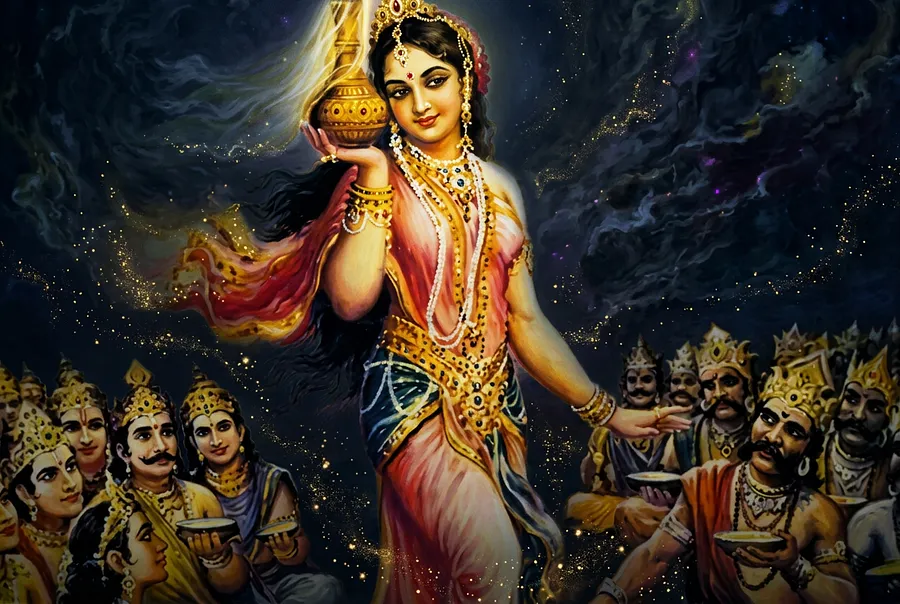
Vishnu’s only female avatar. This Ekadashi is dedicated to Mohini, Lord Vishnu’s only female form. The name itself means “the embodiment of illusion” (from the word “maya”). In this form of a supernaturally beautiful woman, Vishnu deceived the demons and took back the nectar of immortality after the churning of the ocean. Even Shiva, it’s said, was enchanted by Mohini’s beauty.

Гауна Мохини_optimized

Gauna Mohini

Requires a strict fast in honor of Lord Vishnu. Those who cannot go without food all day and night are allowed one meal after noon, followed by staying awake all night singing hymns. The fast may only be broken the next morning with fruit and milk. Any grains and tamasic ingredients such as onion and garlic are forbidden.

Vishnu’s only female avatar. This Ekadashi is dedicated to Mohini, Lord Vishnu’s only female form. The name itself means “the embodiment of illusion” (from the word “maya”). In this form of a supernaturally beautiful woman, Vishnu deceived the demons and took back the nectar of immortality after the churning of the ocean. Even Shiva, it’s said, was enchanted by Mohini’s beauty.

Апара_optimized

Apara

During worship of the Lord, it’s important to offer bhog and tulsi leaves, and to donate food and clothing to those in need, sharing the prasad with the whole family. Rice, meat, onion, garlic, and lentils are strictly excluded. The fast is broken the next day, precisely during the Puran muhurta; dairy, dried fruit, fresh fruit, and vegetables are allowed for those who cannot sustain a complete fast.

The “boundless” Ekadashi. The word “Apara” literally means “boundless, infinite,” symbolizing Vishnu’s inexhaustible blessings. The day is linked to the avatar of Vamana, the dwarf, Vishnu’s fifth incarnation. This fast is believed to carry the same merit as bathing in the sacred Ganges on the most auspicious day of the year.

Nirjala

The name translates as “without water.” The fast lasts a full 24 hours without a single sip of water, from dawn on Ekadashi until the following morning. On the evening before, those observing the fast offer a prayer and then eat once that day, avoiding rice and lentils. After the purification ritual, only a drop of water is permitted. During worship, panchamrit is offered — a mixture of milk, ghee, curd, sugar, and honey.

72 hours without food — what science says. A study from the University of Southern California found that a 72-hour fast can completely renew the immune system by triggering the formation of new immune cells. The traditional Nirjala vrat comes close to that length. Improved blood sugar levels, slower aging, and reduced inflammation have also been noted.

Нирджала_optimized
Нирджала_optimized

Nirjala

The name translates as “without water.” The fast lasts a full 24 hours without a single sip of water, from dawn on Ekadashi until the following morning. On the evening before, those observing the fast offer a prayer and then eat once that day, avoiding rice and lentils. After the purification ritual, only a drop of water is permitted. During worship, panchamrit is offered — a mixture of milk, ghee, curd, sugar, and honey.

72 hours without food — what science says. A study from the University of Southern California found that a 72-hour fast can completely renew the immune system by triggering the formation of new immune cells. The traditional Nirjala vrat comes close to that length. Improved blood sugar levels, slower aging, and reduced inflammation have also been noted.

Йогини_optimized

Yogini

Requires food entirely without salt. On the evening before, it’s best to avoid any stimulating food, and on the day of the fast itself, salt altogether. Barley, moong dal, and wheat are excluded both on the eve and on the day itself. The fast may only be broken the following morning, after food and clothing have been given to Brahmins and those in need.

Cursed with white leprosy. A yaksha named Hemamali served Kubera, the god of wealth, by gathering lotus flowers for his puja. One day he became so absorbed in his wife that he forgot his sacred duties. Enraged, Kubera cursed him with white leprosy and separation from his wife. Years of wandering ended only when the sage Markandeya advised Hemamali to observe Yogini Ekadashi — and the curse was lifted.

Padma (Devashayani)

On this day, gram, lentils, honey, certain spices, and any meat are strictly forbidden, as is tamasic food made with garlic and onion. The fast may be broken the next morning with an offering of milk, honey, sugar, and flour. The day marks the beginning of Chaturmas, the sacred four months of the Hindu calendar, during which auspicious ceremonies are not held.

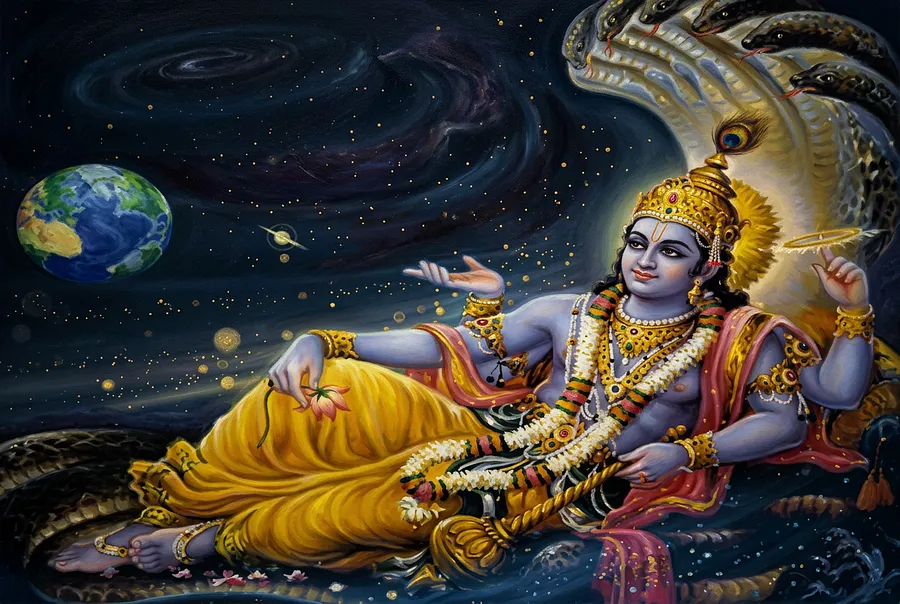
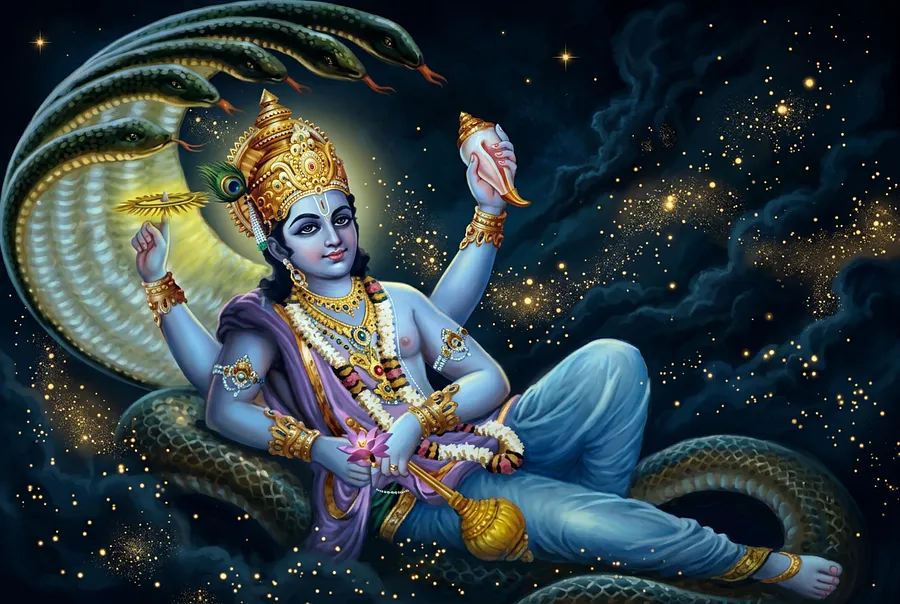
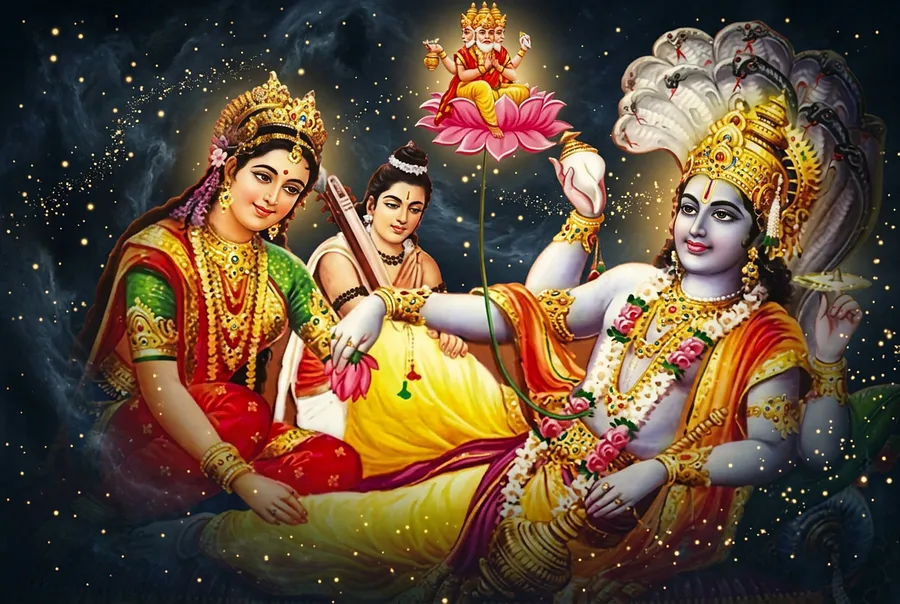
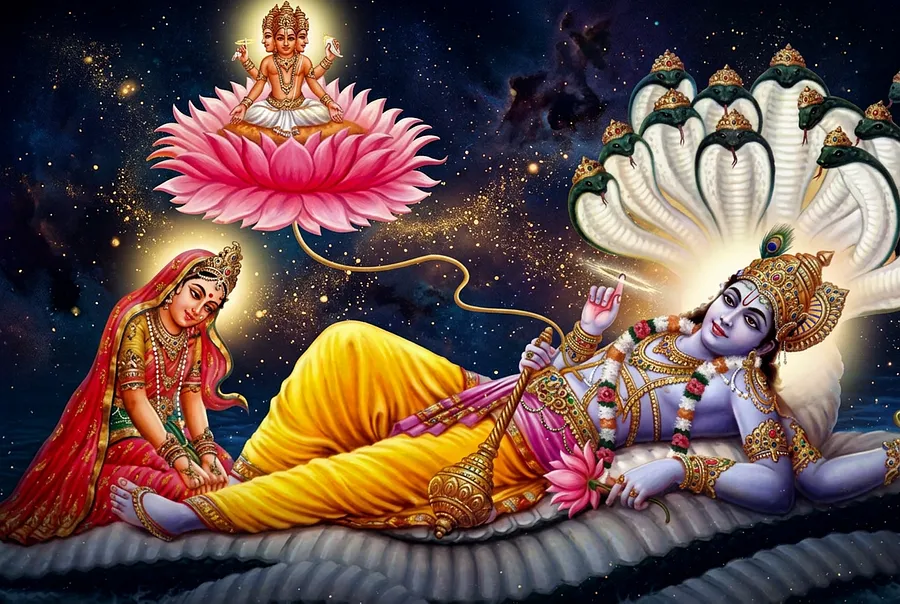
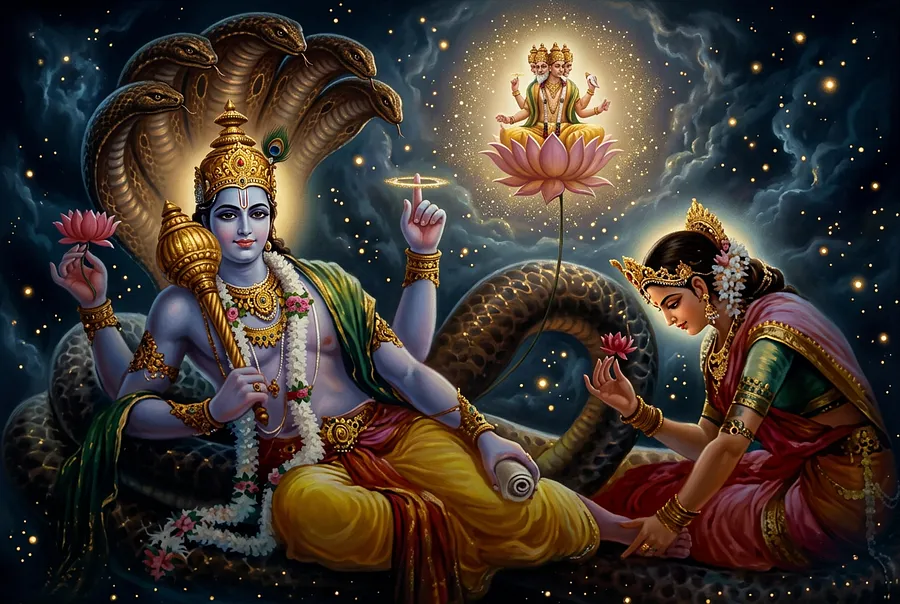
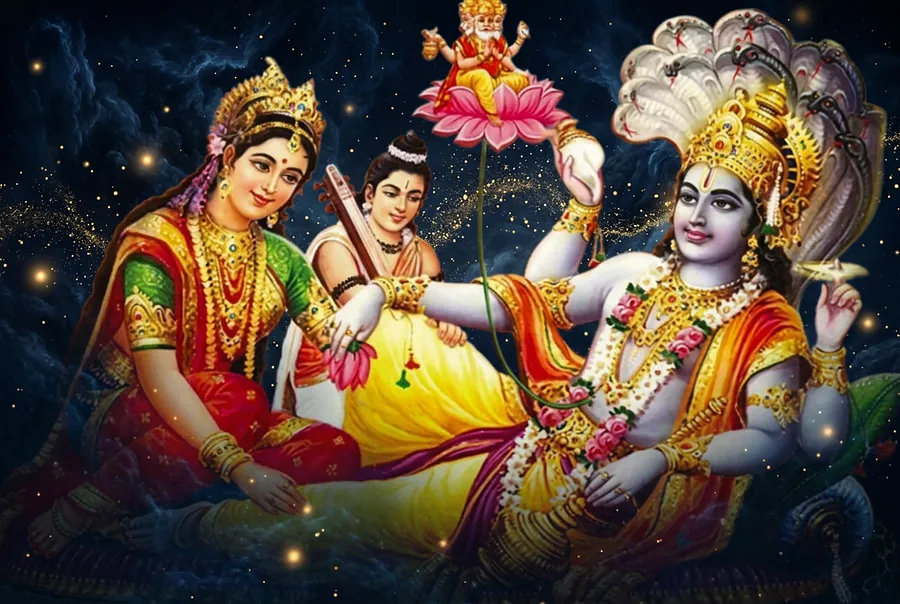
God goes on “cosmic vacation.” On this day, Vishnu falls asleep for four months on the thousand-headed serpent Shesha in the ocean of milk, handing over the governance of the Universe to the other gods — Shiva, Brahma, and the rest. This is how the period of Chaturmas begins, when weddings and new undertakings are postponed. When Vishnu “wakes up” on Prabodhini Ekadashi, the wedding season begins.

Девашьяни_optimized
Девашьяни_optimized

Padma (Devashayani)

On this day, gram, lentils, honey, certain spices, and any meat are strictly forbidden, as is tamasic food made with garlic and onion. The fast may be broken the next morning with an offering of milk, honey, sugar, and flour. The day marks the beginning of Chaturmas, the sacred four months of the Hindu calendar, during which auspicious ceremonies are not held.

God goes on “cosmic vacation.” On this day, Vishnu falls asleep for four months on the thousand-headed serpent Shesha in the ocean of milk, handing over the governance of the Universe to the other gods — Shiva, Brahma, and the rest. This is how the period of Chaturmas begins, when weddings and new undertakings are postponed. When Vishnu “wakes up” on Prabodhini Ekadashi, the wedding season begins.

Камика_optimized

Kamika

Celebrated during Chaturmas, when Lord Vishnu is believed to be asleep. Besides flowers, he is offered milk, fruit, and sesame seeds, as well as panchamrit. The best practice is a full day-long fast, with the first meal taken only after food has been distributed to the poor the next morning; if eating once, rice and meat are excluded from the diet. Offering fresh tulsi buds carries special significance on this day.

One tulsi leaf equals a thousand cows. It’s believed that offering a single tulsi leaf to Lord Vishnu on Kamika Ekadashi brings the same spiritual merit as donating a thousand cows. This is the only Ekadashi when even the most modest offering — a leaf, a quiet mantra — is received by Vishnu with special gratitude, since at this time he is “asleep” and especially values devotion.

Aja

Observing this fast destroys sin and ignorance. Grains, leaves, or coriander seeds are offered to the Lord. Gram, seeds, honey, and certain vegetables such as karonda are forbidden; only one meal a day is allowed. Masoor dal isn’t eaten even the evening before, and betel leaves (paan) are excluded starting from Dashami.

The king who gave up everything. The legend of King Harishchandra, a symbol of absolute truthfulness. He dreamed that he had given his kingdom to the sage Vishwamitra, and when the sage appeared the next morning, the king kept his word. He lost everything: his kingdom, his wife, his son, and became a slave at a cremation ground himself. Only observing Aja Ekadashi restored everything to him and brought liberation.

Аджа_optimized
Аджа_optimized

Aja

Observing this fast destroys sin and ignorance. Grains, leaves, or coriander seeds are offered to the Lord. Gram, seeds, honey, and certain vegetables such as karonda are forbidden; only one meal a day is allowed. Masoor dal isn’t eaten even the evening before, and betel leaves (paan) are excluded starting from Dashami.

The king who gave up everything. The legend of King Harishchandra, a symbol of absolute truthfulness. He dreamed that he had given his kingdom to the sage Vishwamitra, and when the sage appeared the next morning, the king kept his word. He lost everything: his kingdom, his wife, his son, and became a slave at a cremation ground himself. Only observing Aja Ekadashi restored everything to him and brought liberation.

Павитропана_optimized

Pavitropana (Shravana Putrada)

Falls on the 11th lunar day of the waxing moon in the month of Shravana — July or August by the Gregorian calendar.

The Ekadashi for a son. On this day, those fasting for the birth of a son donate money, food, and clothing to temples. In the tradition, a son holds special importance: he cares for his parents in old age and performs the shraddha rites that ensure their well-being after death. This goal is so significant that two separate Ekadashis are devoted to it — Pavitropana and Putrada (“giver of sons”).

Parivartini (Vamana, Parshva)

Fasting and prayer to Lord Vishnu on this day cleanse sin and please Goddess Lakshmi. It’s best not to eat after sunset on Dashami. The Lord is offered sesame, seasonal fruit, and tulsi leaves; after the evening prayer, fruit, dairy, and dried fruit are allowed, while rice, grain, and beans are forbidden.

God changes position in his sleep. On this day, Vishnu turns over during his cosmic sleep — the word “parivartini” itself means “the one who turns.” This day also commemorates the avatar of Vamana, the dwarf who spanned the entire Universe in three steps and sent King Bali to the underworld.

Паршва_optimized
Паршва_optimized

Parivartini (Vamana, Parshva)

Fasting and prayer to Lord Vishnu on this day cleanse sin and please Goddess Lakshmi. It’s best not to eat after sunset on Dashami. The Lord is offered sesame, seasonal fruit, and tulsi leaves; after the evening prayer, fruit, dairy, and dried fruit are allowed, while rice, grain, and beans are forbidden.

God changes position in his sleep. On this day, Vishnu turns over during his cosmic sleep — the word “parivartini” itself means “the one who turns.” This day also commemorates the avatar of Vamana, the dwarf who spanned the entire Universe in three steps and sent King Bali to the underworld.

Индира_optimized

Indira

Observed for the liberation of one’s ancestors; on this day, Lord Shaligram is worshipped. From the evening before Ekadashi, no more than one meal is eaten. The fast may only be broken on Dashami, after the tarpana ceremony and offering food to Brahmins. On Ekadashi itself, a complete grain-free fast is kept, after which food is given to Brahmins, and then to a crow, a cow, and a dog. The fast is finally concluded on Dvadashi with a family meal after puja.

Saving a father from hell. King Indrasena learned from the sage Narada that his late father was suffering in the realm of Yama, the god of death. On Narada’s advice, the king observed Indira Ekadashi, and his father was freed and ascended to the heavens. This is the only Ekadashi specifically intended for the liberation of ancestors.

Padmini

The fast purifies mind, soul, and body. Rice, chickpeas, spinach, honey, and urad dal are forbidden; those who cannot keep a strict fast are allowed fruit and dairy. It begins on Dashami: it’s important to eat light food without onion, garlic, or hot spices, and to avoid food served in bronze dishes.

The “lotus” Ekadashi. The name comes from the word “padma,” lotus. This rare Ekadashi occurs only in the intercalary lunar month (Adhika Masa), which happens once every 2–3 years, and is considered especially powerful precisely because of its rarity.

Падмини_optimized
Падмини_optimized

Padmini

The fast purifies mind, soul, and body. Rice, chickpeas, spinach, honey, and urad dal are forbidden; those who cannot keep a strict fast are allowed fruit and dairy. It begins on Dashami: it’s important to eat light food without onion, garlic, or hot spices, and to avoid food served in bronze dishes.

The “lotus” Ekadashi. The name comes from the word “padma,” lotus. This rare Ekadashi occurs only in the intercalary lunar month (Adhika Masa), which happens once every 2–3 years, and is considered especially powerful precisely because of its rarity.

Парама_optimized

Parama

Observing this fast removes sin and opens the path to the realm of the gods. Only sattvic food is allowed — fruit, sweets, dairy; this is the option for those who cannot go a full day without food at all. Stricter practitioners keep a 24-hour fast on water alone, excluding lentils, gram, honey, meat, and vegetables.

The “supreme” Ekadashi. The word “parama” means “supreme, highest.” Like Padmini, this Ekadashi occurs only in the intercalary lunar month and is considered one of the rarest and most powerful for reaching the “realm of the gods.”

Papankusha

The fast begins as early as Dashami. Rice, barley, wheat, gram, moong, and urad dal — the seven grains honored on this day — are excluded even the day before. Food that’s heavy on digestion is also forbidden: sabudana, chips, bananas, fried dishes. Water, fruit juice, and milk are allowed. The fast may only be broken on Dvadashi, after offering food to Brahmins.

Tamer of the elephant of sins. “Papa” means sin, “ankusha” is the sharp hook used by an elephant handler. Just as a small hook controls a huge elephant, this fast “pierces and destroys mountains of sin.” The human mind is compared here to a wild elephant, and the fast to the tool that tames it.

Папанкуша_optimized
Папанкуша_optimized

Papankusha

The fast begins as early as Dashami. Rice, barley, wheat, gram, moong, and urad dal — the seven grains honored on this day — are excluded even the day before. Food that’s heavy on digestion is also forbidden: sabudana, chips, bananas, fried dishes. Water, fruit juice, and milk are allowed. The fast may only be broken on Dvadashi, after offering food to Brahmins.

Tamer of the elephant of sins. “Papa” means sin, “ankusha” is the sharp hook used by an elephant handler. Just as a small hook controls a huge elephant, this fast “pierces and destroys mountains of sin.” The human mind is compared here to a wild elephant, and the fast to the tool that tames it.

Рама_optimized

Rama

Those who cannot fast completely should avoid rice and any non-vegetarian food; those observing the fast abstain from food all day, and if that’s not possible, eat only vegetarian, organic food. During puja, turmeric is applied to basil leaves before offering them to the Lord.

The Ekadashi of the month of Kartik. This Ekadashi falls in the most sacred month, Kartik, especially dear to Lord Krishna. Fasting on this day is believed to destroy even the heaviest sins and grant both a happy life and liberation from the cycle of rebirth.

Devuthana

Believed to be the day Lord Vishnu wakes from his four-month sleep, after which devotees may once again perform the auspicious ceremonies postponed during Chaturmas. Food is taken at midday on Dashami, then not again until the following morning after Ekadashi, so that by the fasting day not even a trace of food remains in the body. Some abstain from food and water entirely, while others sustain themselves on fruit, milk, juice, and tea; grains, vegetables, and cereals are excluded for everyone on this day.

The wedding of a plant and a stone. On this day Vishnu wakes from his four-month sleep, and a unique ceremony is held — Tulsi Vivaha, the symbolic marriage of the tulsi plant to the Shaligram stone, a form of Vishnu. This marks the start of the wedding season in India. According to legend, Tulsi was once a woman named Vrinda, devoted to Vishnu.

дэватхуна_optimized
дэватхуна_optimized

Devuthana

Believed to be the day Lord Vishnu wakes from his four-month sleep, after which devotees may once again perform the auspicious ceremonies postponed during Chaturmas. Food is taken at midday on Dashami, then not again until the following morning after Ekadashi, so that by the fasting day not even a trace of food remains in the body. Some abstain from food and water entirely, while others sustain themselves on fruit, milk, juice, and tea; grains, vegetables, and cereals are excluded for everyone on this day.

The wedding of a plant and a stone. On this day Vishnu wakes from his four-month sleep, and a unique ceremony is held — Tulsi Vivaha, the symbolic marriage of the tulsi plant to the Shaligram stone, a form of Vishnu. This marks the start of the wedding season in India. According to legend, Tulsi was once a woman named Vrinda, devoted to Vishnu.

Утапанна_optimized

Utpanna

By tradition, those who observe this fast find comfort in life and, after death, take refuge with Lord Vishnu. Those with enough strength and resolve should keep a strict fast on water alone; others should avoid garlic, alcohol, meat, masoor dal, and similar foods. Special importance is placed on inviting married women and offering them fruit; on this day, kheer with tulsi leaves is also prepared.

The birthday of the goddess Ekadashi. According to legend, it was on this very day that the goddess Ekadashi herself was born — she emerged from the body of the sleeping Vishnu to defeat the demon Mura, who had been granted invulnerability to men. She destroyed the demon with a single glance, and Vishnu named her Ekadashi.

Mokshada

Like the other Ekadashis, marked by a fast from dawn until the following morning. Some keep a strict fast without any food at all, others a partial one, on fruit juices, dried fruit, milk, and fresh fruit. Those who don’t fast but wish to honor the day avoid onion, garlic, legumes, rice, and similar foods, favoring fruit, vegetables, dairy, and nuts instead. On this day, bel tree leaves are also eaten.

The day of the Bhagavad Gita. This Ekadashi coincides with Gita Jayanti, the day Krishna spoke the Bhagavad Gita to Arjuna on the battlefield of Kurukshetra. “Mokshada” means “the one that grants liberation (moksha).” In South India it’s called Vaikuntha Ekadashi — it’s believed that on this day the gates of Vishnu’s abode open.

Мокшада_optimized
Мокшада_optimized

Mokshada

Like the other Ekadashis, marked by a fast from dawn until the following morning. Some keep a strict fast without any food at all, others a partial one, on fruit juices, dried fruit, milk, and fresh fruit. Those who don’t fast but wish to honor the day avoid onion, garlic, legumes, rice, and similar foods, favoring fruit, vegetables, dairy, and nuts instead. On this day, bel tree leaves are also eaten.

The day of the Bhagavad Gita. This Ekadashi coincides with Gita Jayanti, the day Krishna spoke the Bhagavad Gita to Arjuna on the battlefield of Kurukshetra. “Mokshada” means “the one that grants liberation (moksha).” In South India it’s called Vaikuntha Ekadashi — it’s believed that on this day the gates of Vishnu’s abode open.

Why rice isn't eaten on Ekadashi

There’s a beautiful legend about this: a drop of sweat that fell to the ground from Lord Brahma’s head turned into a demon. When the demon asked for a place to live, Brahma placed him inside the grains of rice that people eat on Ekadashi — there, the demon turns into a worm in the stomach.

But there’s also a fairly down-to-earth explanation for this rule. On the day of Ekadashi, the moon pulls on water especially strongly, and its rays carry heightened cosmic energy. Rice, in turn, contains a lot of water, and eating it on this particular day can increase fluid retention in the body and trigger colds, sinus issues, and similar conditions. So avoiding rice is a sensible way of caring for the body on this particular lunar day.

If the subject of Ekadashi, lunar cycles, and Vedic practices resonates with you, I invite you to explore my Vedic lunar calendar or book a one-on-one consultation, where we can look at how lunar rhythms play out in your own chart specifically.

Наши статьи